On a closed-off industry, AI as a creative partner, and why visuals matter more than you think
The idea of making my own game had been brewing for years. I also tried breaking in the "official" way — portfolio, interviews, applications. The result? Silence. Even from people at game design schools, which still puzzles me a bit. Maybe I did something wrong, maybe the industry is just very insular — I genuinely don't know. What I do know is that I'm not alone in this.
I'm writing this mainly for people who've had similar experiences. Because there are really more of us out there.
What's the game?
The mechanic is a mashup of 2048 and Alchemy — combining elements into increasingly complex combinations, but with a scoring system and a real possibility of losing. Pure Alchemy has a great loop, but it lacks "stakes." I wanted to fix that.
Claude Code as a project partner
I've completed several programming courses and worked through dozens of tutorials. But Claude Code was what actually turned the vision into a working project. I hear a lot of pushback against AI in creative contexts — I get where it comes from, but for me it's simply a tool. AI doesn't come up with the game for me, doesn't design the mechanics. I treat it like a partner who happens to know how to code. Nothing more, nothing less.
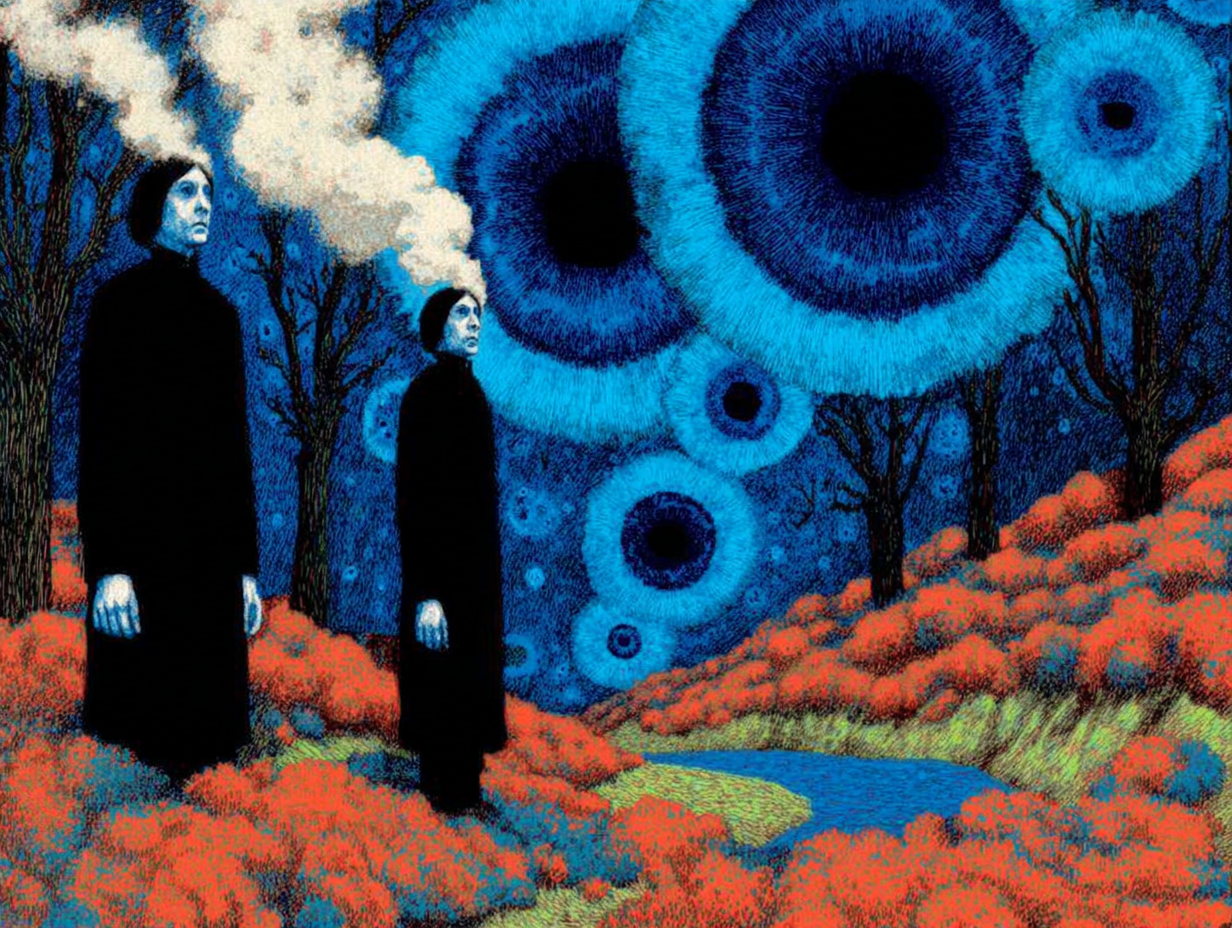
Ludzie z dymiącymi głowami na psychodelicznym niebieskiem tle Do not dwell on thinking - build, prototype and test!For people like me — with ideas, experience, and no time for a 5-year computer science degree — AI cut the distance from "I want to make a game" to "the game works" by years.Do not think too much - build, prototype and test!
Community first — don't build in a vacuum
I have a community of around 20,000 people on Instagram interested in AI and generative art. The idea was simple: ship the game as fast as possible and gather feedback, rather than polishing it alone in a closed room for a year.
That turned out to be the right call.
What feedback actually taught me
The core gameplay loop — everyone considered it solid. But almost everyone pointed to visuals as the deciding factor in whether they'd come back. I was convinced the mechanics would "speak for themselves." I was wrong. In this particular game, the visual layer is an integral part of how the game feels — not decoration.
The takeaway is simple: we make games for people, so people's opinions are data, not criticism.
I'm currently working on the next iteration — mostly on the visual side. If you want to see where things stand, give it a try below. And if you're a developer with a few minutes for feedback — I'd genuinely appreciate it. Maybe it'll change my mind about the Polish gamedev scene a little. 🙂