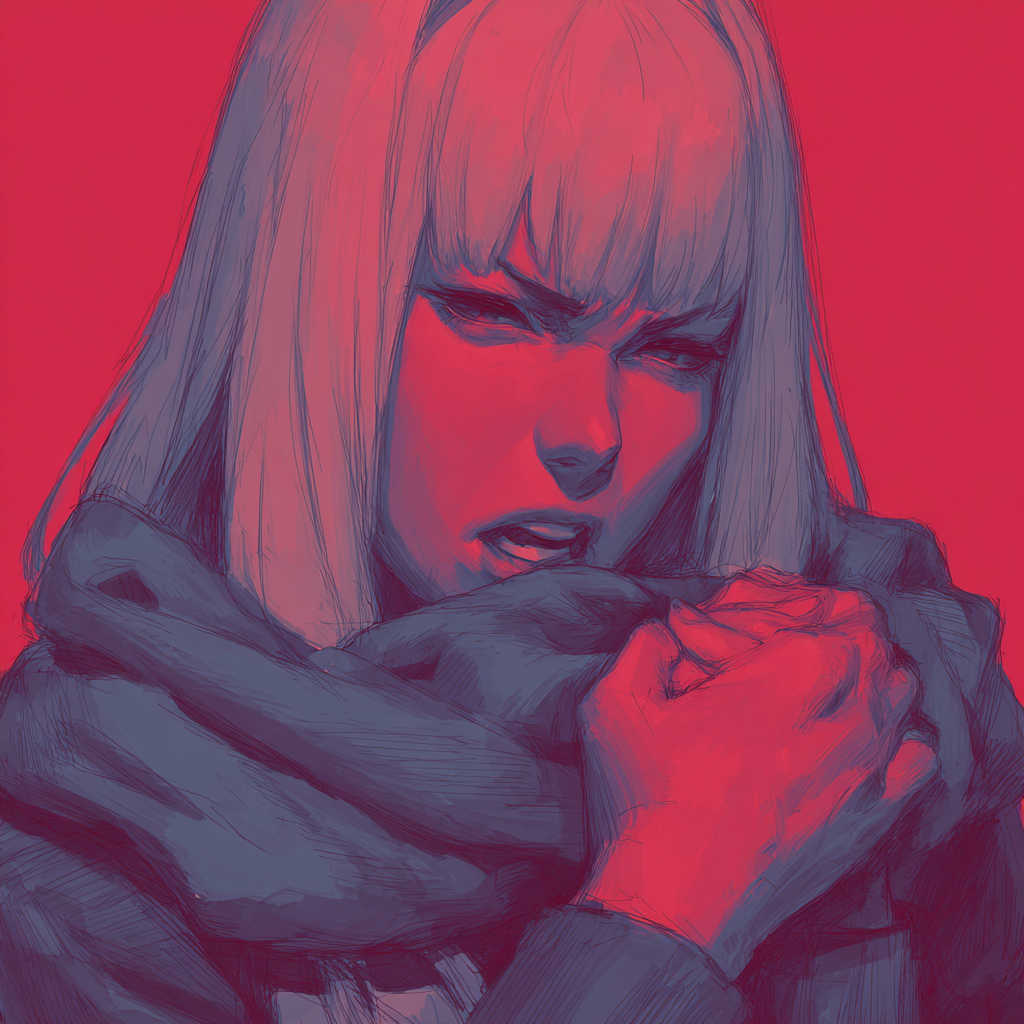
There's a trend of writing Midjourney prompts that fill half the screen — ideally in JSON format. This is the wrong direction. Generative art rewards clarity: start with a mental image, then use as few words as possible, and set style and variants with parameters. Shorter = cleaner = more repeatable.
1) The Token Limit Exists (and It Doesn't Care About Your Intentions)
The models parsing your prompt have input length limitations. If you overload the content, the second half of your prompt may not even make it into the encoder (or it will be devalued relative to the beginning). Result: you labour over paragraphs the model doesn't take seriously anyway.
Takeaway: Want control? Shorten. Put the most important words first; move the rest to parameters.
2) Efficiency and Digital Hygiene
If you're only listening to audio, you don't turn on a YouTube video — that's a waste of bandwidth and energy. In prompts, "waste" means unnecessary words. If you can achieve the effect in 12 words, don't use 120. You gain readability, faster iteration, and less randomness.
3) A Creative Process That Works
- Picture the image (what, for whom, mood, lighting).
- Describe it in the shortest possible sentence — no catalogues of adjectives.
- Add parameters for framing/style/repeatability. Done.
4) Parameters Instead of an Essay on Style
Instead of sentences about "cinematic framing, wide angle, and strong contrast" — use switches:
--ar 16:9– aspect ratio--stylize 100or--s 100– style strength--chaos 20– variation diversity--seed 1234– repeatability--style raw– less default smoothing--sref <URL>– style reference (link to an example style)--cref <URL>– character reference (character consistency)
Why describe a style with a million words when you can use a code and a reference? One link = a hundred fewer adjectives.
5) Examples: Long Prompt vs. Short + Parameters
Portrait
Wrong (over-written):
Ultra detailed hyperrealistic portrait of a young woman with soft rim light, cinematic tone mapping, bokeh background, high dynamic range, realistic skin pores, professional studio lighting, 85mm lens look, ...Right (essence + parameters):
calm studio portrait of a young woman, soft rim light --ar 3:4 --style raw --s 120 --seed 314Landscape
Wrong:
Extremely vast panoramic view of misty mountains at golden hour with volumetric lighting and dramatic atmosphere, ultra wide landscape, photoreal, ...Right:
misty mountains at golden hour, low sun haze --ar 21:9 --s 100 --chaos 15Style Defined by a Reference
Wrong:
In the style of minimal brutalist poster, limited palette, heavy grain, geometric forms, bold typography, retro print texture, ...Right:
minimal brutalist poster, geometric form --ar 2:3 --s 90 --sref https://example.com/ref/brutalism-board6) A Simple Experiment: Test Shortening
- Generate an image with a verbose prompt.
- Remove 50% of the words, keeping the meaning and parameters. Compare coherence.
- Then remove another 50% — until the results start to drop off. The "sweet spot" is usually surprisingly short.
7) Minimal Templates (Copy/Paste)
<object/scene>, <light/mood> --ar 16:9 --style raw --s 100
<portrait>, soft rim light --ar 3:4 --s 120 --seed <number>
<minimal poster> --ar 2:3 --s 90 --sref <moodboard URL>
8) What About JSON?
JSON looks "professional", but the model doesn't reward format. What matters is the content and word order, not whether you wrap it in curly braces. JSON also easily obscures priorities and increases the risk of important parts being cut off by the length limit.
Be smart. Create more.
First the image in your head. Then one sentence. The rest is parameters.
See my AI images →Summary
Minimal prompts provide a cleaner signal to the model, faster work, and repeatability. When you want "more style", don't write more paragraphs — crank up the parameters or provide a reference. Shorter means better.