Every culture that couldn't predict something invented itself an oracle. Delphi had a priestess drugged on fumes rising from a crack in the rock. We have a text field and a cursor. The difference is smaller than it looks: in both cases, someone speaks a handful of words, and out of the dark comes an image nobody has seen before.
Same facts, different language: everything below rests on real 2026 events, the exact same ones covered in the more analytical piece next to this one. That one has the dry dates and percentages. This one has the same facts wearing a metaphor, because some truths go down easier in disguise.
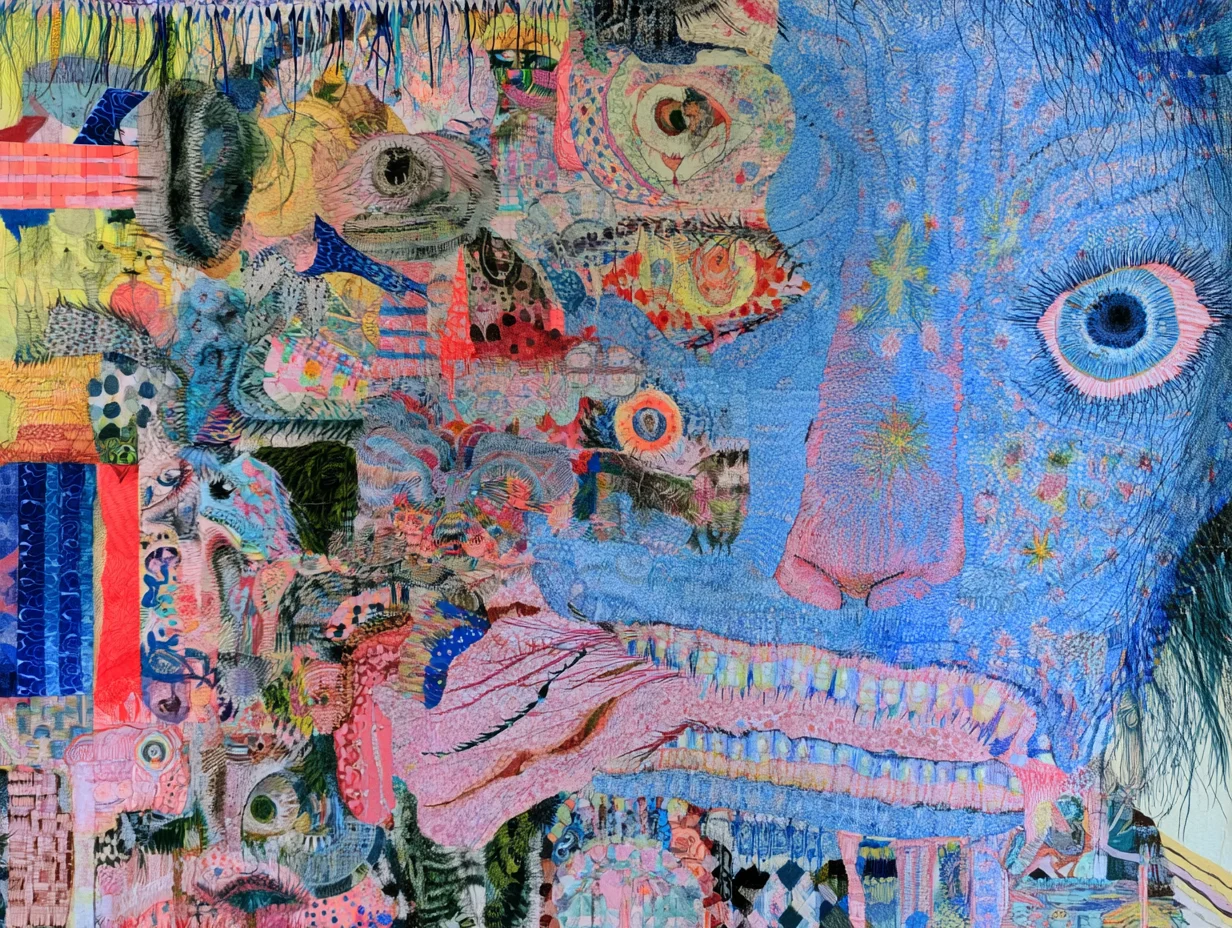
The oracle has no single body. It has many eyes, each looking a different way
The oracle is mortal
The first thing the ancients never had to learn, and we do: image-generation gods die if feeding them costs too much. Sora, OpenAI's video oracle, was born February 1, 2026. Its shutdown was announced March 24. By April 26 its voice had already gone quiet. API access fades out September 24[1] - essentially as you're reading this. Eighty-four days of life. The reason, as it usually is with oracles, wasn't mystical, it was a matter of bookkeeping: the bill for power and chips outgrew what people were willing to pay for visions[2].
Other oracles survived, each on a different virtue. Kling, the Chinese one, feeds on revenue - roughly $500 million a year[3]. Runway feeds on investor faith - its valuation stands at $5.3 billion[4]. Google's Veo feeds on omnipresence, because it's already wherever you already are. None of them is immortal. All of them have simply not ended yet.
The oracle doesn't know its own worth
Ask three priests what this particular oracle is worth and each one gives you a different number. One says: a billion by 2030[5]. Another says: thirty billion by 2033[6]. That's roughly a nine-fold gap, for the same entity, at the same moment in history. It isn't an accounting error - it's a sign that nobody actually knows what this thing is, so everyone prices it according to their own imagination, not the facts.
There's something familiar here from the history of every oracle: nobody ever knew what an answer was worth until it turned out whether it was true. The market does exactly the same thing today, just in a spreadsheet instead of a temple.
The forced confession
Real oracles never had to explain where their power came from. This one does. Since August 2, 2026, EU law makes it say plainly that it's an oracle, not a revelation[7]. California went further and threatens a fine if it doesn't[8]. China makes it wear two marks at once - one visible on its face, one sewn into the lining, invisible to the naked eye[9].
Midjourney itself hasn't joined any of these confession rituals yet[10]. You could read that as defiance or as distraction - but the consequence is the same: a silence that used to sound like mystery now starts sounding like a tax bill overdue.
This is what a face looks like when it's ordered to drop the veil - it doesn't disappear, it just splits into channels
It's a strange moment in the history of oracles. They always drew their power from never having to explain the mechanism. Now the law makes them open their robes and show the gears underneath. Some of the power an oracle loses when it's forced into honesty isn't a side effect of the regulation - it's exactly what the regulation was built to do.
The council of priests argues over who owns the visions
Who owns an image no hand ever painted? Courts in 2026 took that question more seriously than ever before. Disney, Universal and Warner Bros. Discovery sued Midjourney directly over its oracle conjuring faces from other temples a little too readily - Superman, Batman. Discovery closes now, in September 2026, and the real verdict likely won't land until 2027[11]. That dispute, still unresolved, has already managed to define the question the whole industry will have to answer: does an oracle that learned from other people's images have the right to summon them back on command?
Elsewhere the council of priests has already ruled - Anthropic paid one and a half billion dollars to close a similar dispute over books[12]. It's the first hard proof of what it costs to feed an oracle on someone else's work without asking.
The oracle no longer just wants to show you something - it wants to become it
This is where the story gets most unsettling. David Holz, Midjourney's founder, doesn't hide where this is headed: from image, through video, to a three-dimensional world running in real time[13]. An oracle that once showed you a single vision on request now wants to build a place you can walk into whole, not just look at.
This stopped being a story about pictures. It's a story about the line between watching a vision and living inside one growing thinner by the month - while the company building it still won't say where it got the material it's shaping that world out of.
What 2027 actually brings
Taking the costume off now. Three things I think are most likely, based on what's already happened, not on a hunch:
- Another oracle will die of the same cause as Sora before the year is out - the cost of feeding it will outrun what people are willing to pay for one revelation.
- The forced confession stops being an EU curiosity and becomes a global norm, because California and China have already shown it can be legislated into existence, not just requested politely.
- The ruling in Midjourney v. Hollywood sets a precedent for every other oracle, regardless of who wins - because it's the first time a court has to decide outright whether summoning someone else's face on demand is allowed.
The oracle won't disappear in 2027. It will, however, have to learn to say what it is, what it costs to keep alive, and whose visions it's really showing you. This isn't the end of the magic. It's the moment the magic starts paying taxes.
Sources
- Wikipedia, "Sora (text-to-video model)"; OpenAI, "What to know about the Sora discontinuation"
- TechCrunch, "OpenAI's Sora was the creepiest app on your phone - now it's shutting down"
- Sacra, "Kling revenue, funding & news"
- Morphed, "Runway Statistics 2026"
- Grand View Research, "AI Image Generator Market Size To Reach $1.08Bn By 2030"
- SkyQuest, "AI Image Generator Market"
- Gibson Dunn, "EU AI Act Omnibus Agreement - Postponed High-Risk Deadlines"
- Neomanex, "CA AI Transparency Act Takes Effect - Midjourney Lacks C2PA"
- China Law Translate, "Measures for Labeling of AI-Generated Synthetic Content"
- Neomanex, "CA AI Transparency Act Takes Effect - Midjourney Lacks C2PA"
- The Art Newspaper, "Midjourney strikes back: sued AI giant demands Hollywood's secrets"
- Open Class Actions, "Anthropic $1.5B Copyright Settlement Wins Final Approval"
- Level Up Coding, "David Holz Shared His Long-Term MidJourney Vision"