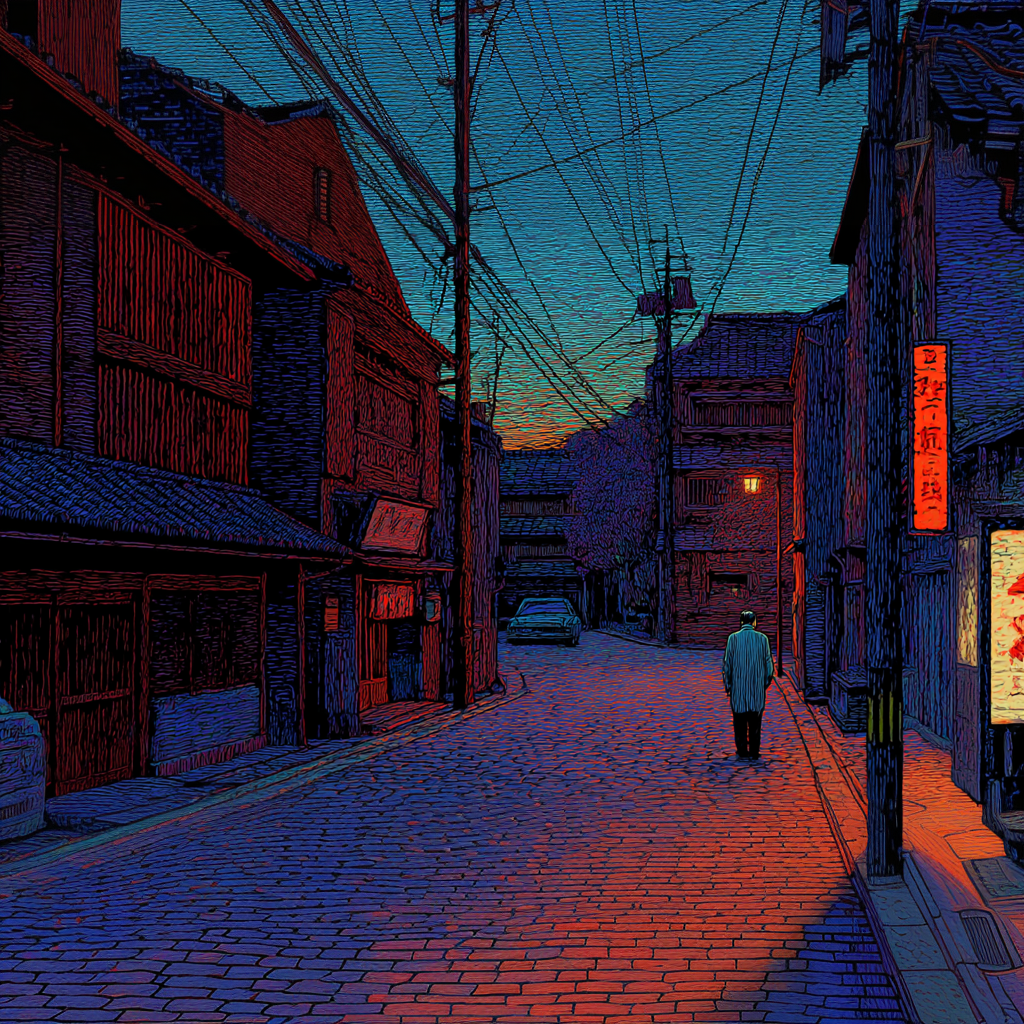
Whether it is a pencil, a brush, Blender, or Midjourney — the tool is only a medium. What truly creates art is the emotion you put into it and the fundamentals you have mastered. Here is my reflection after years of creating — from tradition to AI.
The Tool Is Neutral
When I began my adventure with AI art, I often heard: "This is not real art, because a human didn't create it." Then I saw debates between digital and analog photographers. Earlier still — between oil and acrylic painters. History repeats itself.
The truth is: the medium does not define the value of art. Did cooking stop being an art when the food processor appeared? Did photography stop being art when digital cameras came along? Is painting dying because we have Photoshop?
I have seen mediocre oil paintings and brilliant digital graphics. I have seen wonderful analog photographs and weak pictures taken with the most expensive Nikons. And now I see both mindless AI generation and thoughtful, emotionally rich works created with the help of artificial intelligence.
Emotion — The True Fuel of Art
Regardless of what you use to create, the most important question is: What do you want to say?
When I create in Midjourney, I do not think of technical parameters as an end in themselves. I think about mood. About the feeling I want to evoke. About the story I am telling. The tool is simply the means of bringing that vision into the light.
The same applies to cooking — you can have the best kitchen equipment, but if you do not understand how flavors work together, how heat affects ingredients, how to balance acidity with sweetness — you will not create anything of value.
✨ My rule: Before you start creating, ask yourself: "What do I want the viewer to feel?" If you have no answer, pause. Art without intention is just a pretty picture.
Fundamentals — Your Foundation
Here is another truth I have learned over the years: You cannot skip learning the basics.
Composition
The rule of thirds, leading lines, balance — these are not boring rules. They are the visual language used by all great artists. Whether you use a brush or prompt an AI — composition still rules.
Bad framing will ruin even the most beautiful image. Good composition will rescue an average subject. That is a universal truth.
Color Theory
Warm versus cool. Complementary versus analogous. Colors are emotions in their purest form:
- Blue calms, but can also feel lonely
- Red energizes, but can overwhelm
- Yellow brightens, but irritates in excess
- Green harmonizes, but can feel flat without an accent
You do not need to be an expert, but you must understand that colors are not random. They work for you — or against you.
Light and Shadow
Without shadow there is no depth. Without light there is no drama. This is another universal truth — whether you paint, render in 3D, or prompt Midjourney.
✨ Exercise: For one week, pay attention only to light. How does it fall through a window? How does it reflect off surfaces? How does it create atmosphere? That observation will teach you more about art than hundreds of tutorials.
Study Great Art — The Best Teacher
Here is my most important piece of advice: Absorb art. All of it. Every kind.
Do not limit yourself to one medium. If you create AI art, study Renaissance painters. If you paint traditionally, analyze street photography. If you cook, look at architecture.
Every art form has something to teach about composition, color, mood, and storytelling. Caravaggio will teach you about dramatic light. Rothko about the power of minimalism. Beksiński about captivating darkness.
My Personal "Must-See" List:
- Classical painting — Caravaggio, Vermeer, Turner (mastery of light)
- Impressionism — Monet, Renoir (color and atmosphere)
- Modernism — Kandinsky, Mondrian (abstraction and form)
- Surrealism — Dalí, Magritte (pushing boundaries)
- Contemporary art — Beksiński, Hockney (emotion and technique)
- Photography — Ansel Adams, Cartier-Bresson (framing and the decisive moment)
- Film — Tarkovsky, Malick (visual storytelling)
You do not need to remember everything. You need to let all of it permeate you. Your taste will develop. Your eye will sharpen.
Practice — There Is No Escaping It
Whether it is 10,000 hours or 10,000 repetitions — fundamentals require practice. Even with AI.
Think prompting is easy? Try creating exactly the vision you have in your head. Try controlling light, composition, and mood through words alone. It is like poetry meeting engineering.
Every medium has its learning curve. Every one requires time and repetition. But knowing the fundamentals cuts that path in half.
AI as the Democratization of Art
Here I touch on something close to my heart. AI is not killing art — it is opening it up to everyone.
Not everyone has time for ten years of painting lessons. Not everyone has the manual dexterity for drawing. But maybe everyone has something to say? Maybe everyone has a vision, an emotion, a story?
Midjourney is my hand in a form biology did not give me. It is my brush whose technique I have not mastered in the traditional sense. But the emotion, composition, color, mood — that is still me.
✨ Reflection: Gutenberg did not destroy literature by inventing the printing press. The democratization of tools does not lower standards — it raises the bar for everyone.
My Path
Before I started with Midjourney, I spent years watching, analyzing, and absorbing art. I will not pretend this is a traditional artist's path — it is not. But it is still a path built on fundamentals.
Every prompt I create is a composition. Every color choice is an emotion. Every light decision is a mood. This is not random. These are choices grounded in knowledge I accumulated over years of engaging with art.
Am I a painter? No. Am I an artist? I create things intended to evoke emotion. You decide whether that is art.
✨ Start Your Artistic Journey
Do not wait for the perfect tool. Start with what you have. Learn the basics. Study great art. And above all — create with emotion.
See how I do it →Summary
It does not matter whether you hold a pencil, a mouse, or type prompts. Art is emotion conveyed through form. The tool is neutral — you are the one who gives it meaning.
Learn composition. Understand color. Study light. Watch great art. And create — no matter what with.
Because at the end of the day it is not about HOW you created the work. It is about WHAT it says and WHAT it makes the viewer feel.
Everything else is just medium.