Synthography is the creation of images with artificial intelligence, where light is not captured by a lens but a generative model synthesizes the frame from text, parameters and reference material. In 2026 it stopped being a curiosity and became a medium of its own, with its own craft, language and history. In this guide I explain what synthography is, where it came from and what it can really do today.
What is synthography?
In one sentence: synthography is writing an image through synthesis, that is composing photo-like graphics by steering an AI model instead of photographing reality.
The name joins the word synthesis with the Greek -graphy, meaning writing or drawing. Where photography records light reflected from a real object, synthography generates an image from a learned distribution of data. A photographer chooses the moment and the frame, while a synthographer describes a vision, sets parameters and iterates until the image matches the idea. The term is fairly new, it has no single widely recognized author, and it spread together with generative models after 2022. In Poland it is popularized, among others, by the Syntografia.pl project.
The simplest intuition: if photography records what was in front of the lens, synthography records what was in the imagination, passed through a model trained on millions of images.
Synthography, photography and photo manipulation: the differences
These three terms are easy to confuse, because the final result can look identical. What sets them apart is the source of the image.
| Feature | Photography | Photo manipulation | Synthography |
|---|---|---|---|
| Source of the image | Light captured by a camera | Existing photos, combined and reworked | Synthesis in an AI model from text and references |
| Starting point | A real scene | Ready frames | A description, parameters, reference images |
| Main tool | Lens and light | Darkroom or layer editor | Prompt, parameters, model |
| What the negative is | Film or sensor | The source file | The model latent space |
| Role of the creator | Observation and framing | Retouching and compositing | Directing the model and curating results |
The boundaries are fluid. Many creators combine techniques: they generate a base synthographically and then retouch it in a classic editor. That does not blur the difference, because the decisive question is whether the image came from capture or from synthesis.
Roots: a short history of image manipulation
Synthography did not appear out of nowhere. It is the newest link in a long chain in which, from the dawn of photography, people bent the truth of the image. Before there was a prompt, there were scissors, double exposure and the darkroom.
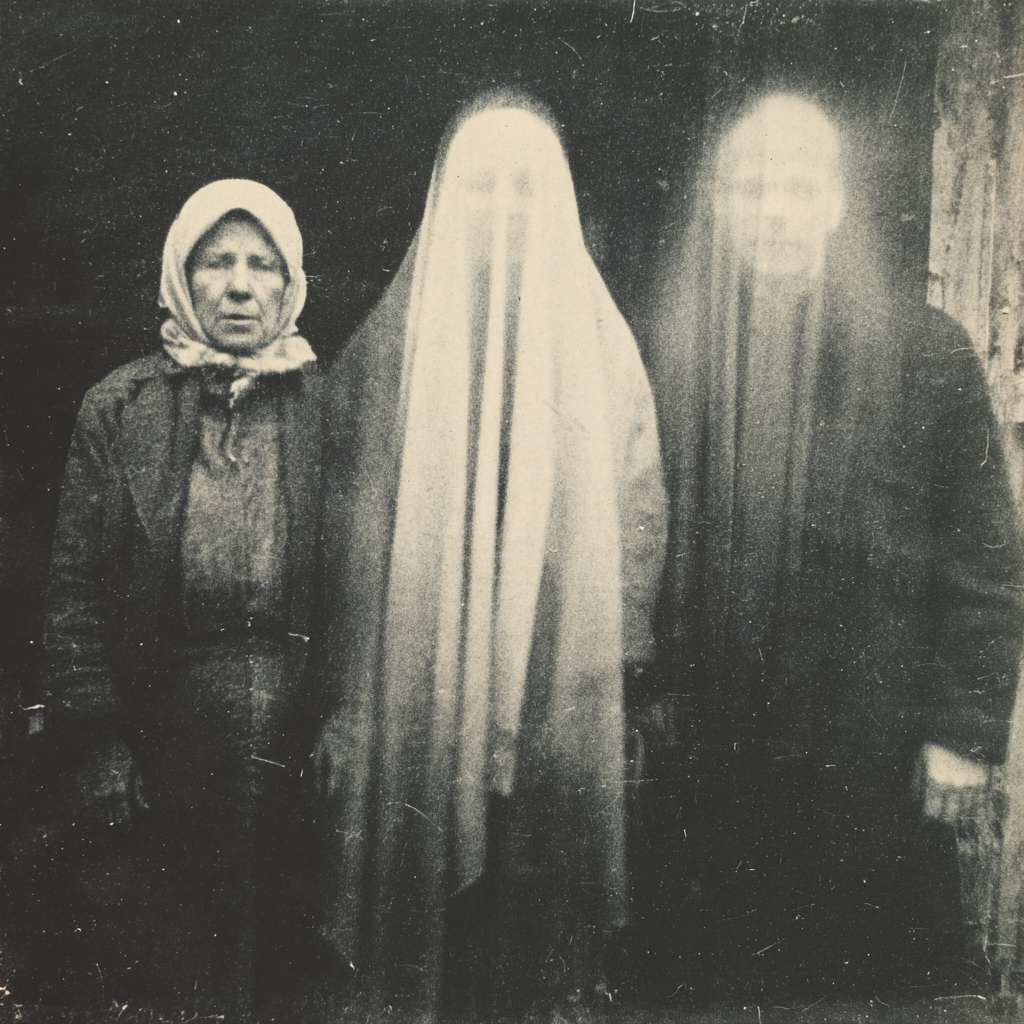
19th-century spirit photography was one of the first forms of faking the image. Here, a contemporary synthographic image echoing that aesthetic.
Combination printing (1857-1858)
As early as the mid-19th century, Oscar Gustave Rejlander assembled his famous The Two Ways of Life (1857) from about thirty separate negatives. A year later Henry Peach Robinson created Fading Away by combining five frames into one moving scene. That was photo manipulation before anyone used the word.
Spirit photography (1860s)
William H. Mumler in Boston began selling portraits in which transparent apparitions of the dead appeared next to the living, produced by double exposure. It was the first commercial wave of images that openly promised to show something that was not there.
Avant-garde photomontage (1910-1930)
Dadaists and surrealists raised cutting and pasting to the level of art. Hannah Höch and John Heartfield cut press photos to build new, often politically sharp meanings. The image stopped being a window onto the world and became raw material.
Political retouching
At the same time, regimes discovered that an image can not only be created but also erased. People who fell out of favour vanished from official Stalin-era photographs. Manipulation became a tool of power.
The digital era (1990)
The release of Adobe Photoshop in 1990 moved the darkroom onto the desk. Layers, masks, cloning and curves made seamless manipulation available to anyone with a computer.
GANs and deepfakes (2014-2017)
In 2014 Ian Goodfellow and colleagues introduced GANs, which learned to generate new, nonexistent images. A few years later came deepfakes, realistic face swaps. The image started to arise not from cutting but from learning.
Diffusion models (2022)
The breakthrough came in 2022, when DALL-E 2, Midjourney and Stable Diffusion opened text-to-image generation to a wide audience. That is when people began to speak of a separate medium, and the word synthography started to make sense.
Photo manipulation: from darkroom to layers
It is worth pausing on photo manipulation itself, because it is the closest ancestor of synthography. Its essence has always been transforming an already existing image: dodging and burning, combining several shots, removing and adding elements, correcting colour. Photo manipulation assumes that somewhere at the start there was a real frame.
Synthography goes one step further, because it abandons that assumption. It needs no original photo, it creates the image from zero. So you could say that photo manipulation edits reality, while synthography invents it. In practice, in 2026 the two techniques blend: the model generates the starting point and a human finishes the details with classic tools.
What synthography can do in 2026
Today models long ago moved beyond a nice picture from a description. Here is what is really possible.
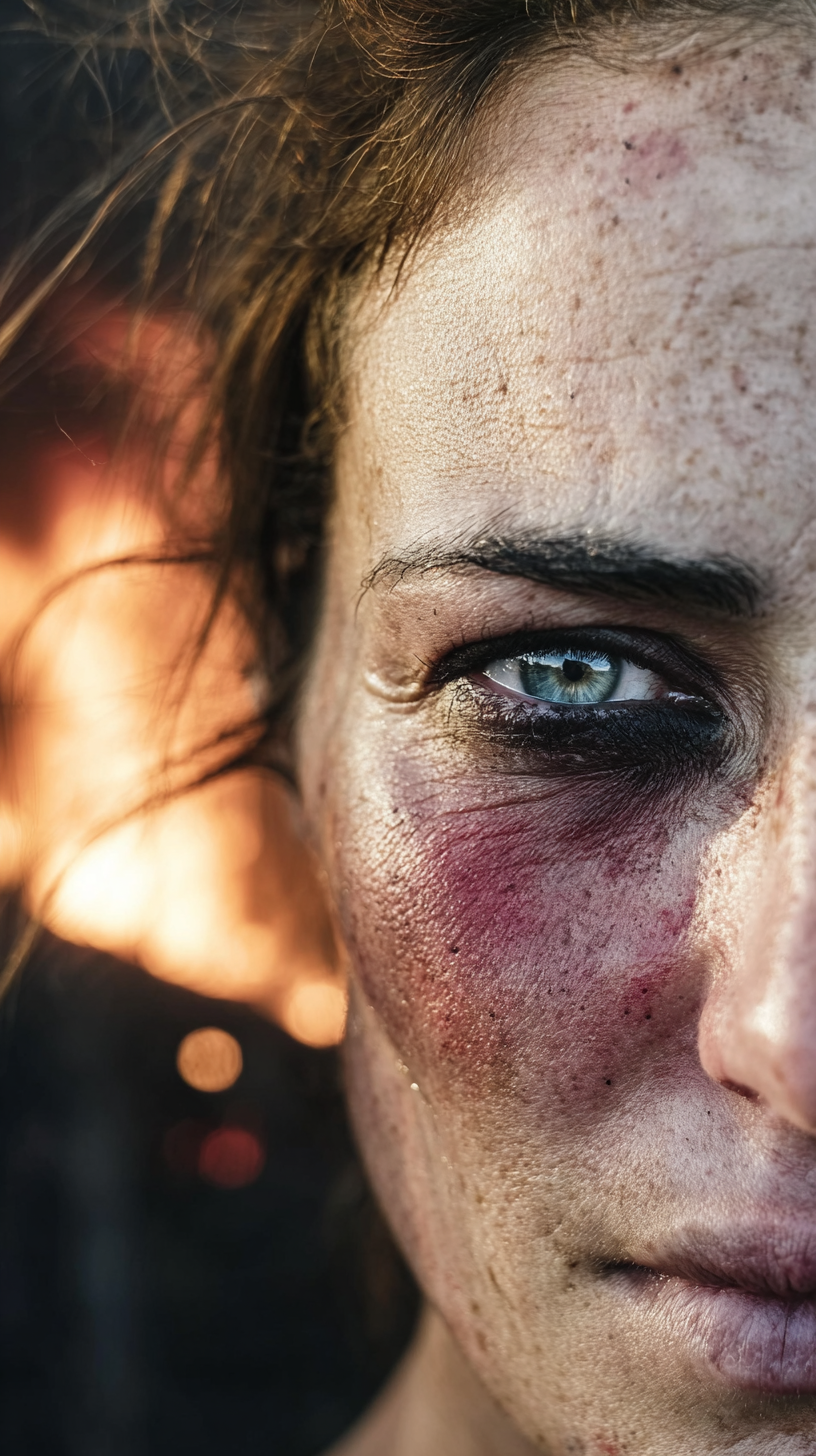
The level of photorealism in 2026 can blur the line between a photograph and synthography.
- Photorealism down to the detail, from skin texture and reflections in the eye to believable light.
- Inpainting and outpainting, painting in missing fragments and extending the frame beyond its original edges.
- Style reference, imposing a consistent aesthetic across a whole series with a single link instead of a hundred adjectives.
- Character reference, so the same protagonist returns across consecutive images.
- Image-to-image work (img2img), where a sketch or a photo becomes the starting point.
- Composition control through pose, edge or depth maps.
- Video generation, short animations built from generated frames.
Applications of synthography
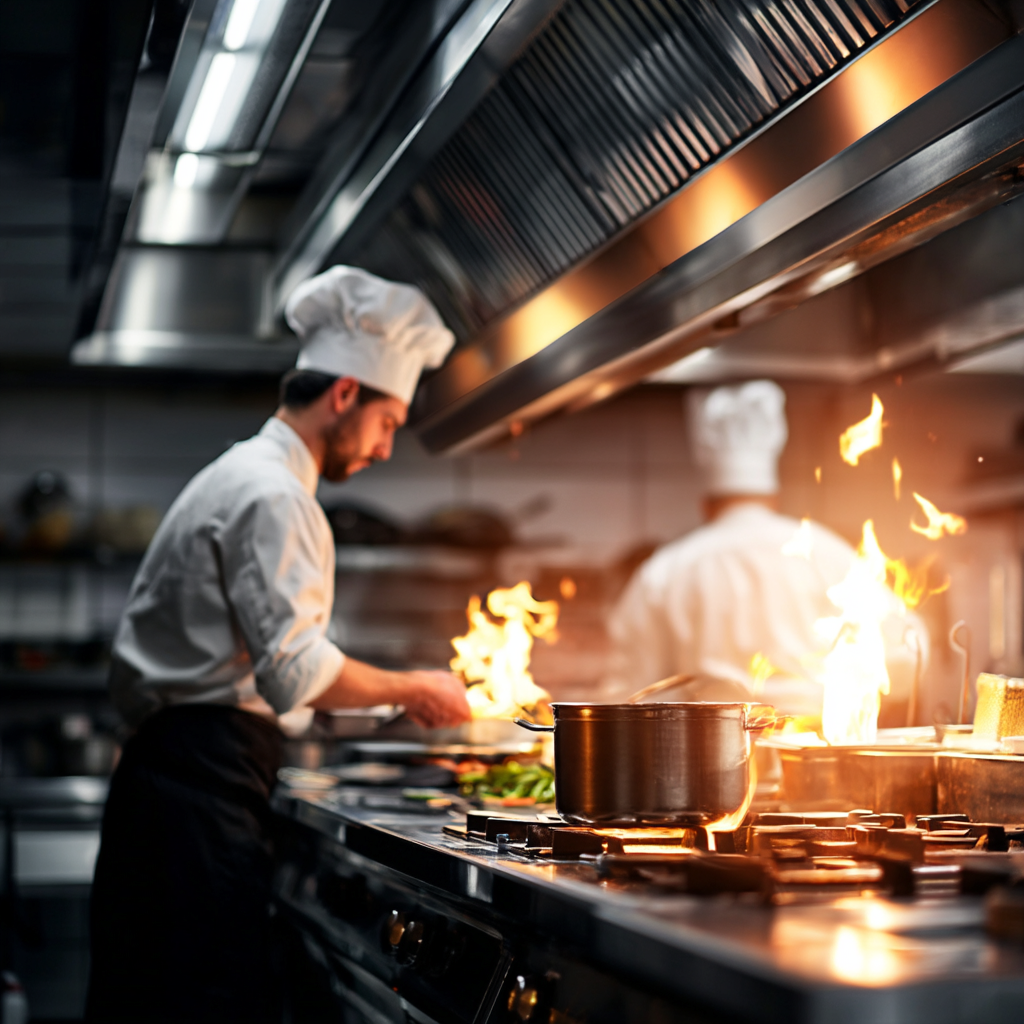
Reportage and commercial scenes, like this kitchen, are now created without a photo shoot.
- Advertising and e-commerce, campaign concepts, packshots and creative variants without a shoot.
- Film and games, where synthography serves for concept art and world visualization.
- Publishing and media, illustrations, covers and graphics for articles.
- Architecture and interiors, quickly testing styles and moods before a project.
- Authored art, treating the model as a new medium rather than a shortcut.
How to get started with synthography
Getting in is easier than ever today, but a few rules help.
- Choose a tool. The most popular is Midjourney (currently the V7 model, with V8 announced), alongside DALL-E, Stable Diffusion and Flux among others.
- Start from a vision, not from words. First see the image in your head, then describe it as briefly as possible.
- Prompt in English, because models understand that language best.
- Steer with parameters, such as aspect ratio or style strength, instead of piling up adjectives.
- Iterate and curate. The first generation is a sketch, value is born in the next attempts and in the selection.
If you want to deepen your prompting craft, see the post on the best Midjourney prompts for 2026 and the guide to the V7 model.
Frequently asked questions
Is synthography the same as photography?
No. Photography records light from a real scene, while synthography generates an image through synthesis in an AI model. The result can look similar, but the source of the image is different.
How is synthography different from photo manipulation?
Photo manipulation reworks already existing photographs, whereas synthography creates an image from scratch, with no original frame. The two techniques are often combined in one project.
Where does the word synthography come from?
It combines synthesis with the Greek -graphy, meaning writing or recording. It means writing an image through synthesis and spread after 2022, together with generative models.
Is synthography art?
Like photography in the 19th century, synthography sparks debate, but it is increasingly treated as a distinct artistic medium. Value comes from the idea and the execution, not from the tool itself.
What tools are used in synthography?
Most often Midjourney, DALL-E, Stable Diffusion and Flux, usually combined with a classic image editor for retouching.
Can synthographic images be used commercially?
Usually yes, but it depends on the plan and terms of the specific tool, as well as on copyright law. Always check the current terms.
Summary
Synthography is not a passing fad but another chapter in the long history of images that escape the simple truth of photography. From combination printing, through spirit photography and photomontage, to diffusion models, people have always wanted to show what the lens could not see. In 2026 we do it with words, parameters and imagination.
Want to see synthography in practice? Visit my AI art auction, and for a concise, definitional cheat sheet read What is synthography on szkoleniemidjourney.pl.